
The Safe and Smart Transportation(S2T) Program
An integrated, multidisciplinary program at the University of Georgia advancing transportation safety, smart technology, and engineering science to address critical challenges in modern transportation systems.
Transportation systems are fundamental to economic prosperity, national security, and technological advancement. Sustained investment in transportation research, development, education, and training is essential to meeting evolving societal needs and enabling future innovations.
To emerge as a state and nationally recognized program in transportation innovation, education and service to the industries, governmental agencies and the public.
An Integrated, Three-Pronged Framework
The S2T Program is structured around an integrated framework — transportation engineering, technology, and science — to address critical challenges in modern transportation systems.
Multimodal transportation systems — roadways, railways, airways, waterways, pipelines, and space aviation — form the backbone of economic vitality, national defense, and technological innovation. The S2T Program builds on UGA's significant investments in transportation research and education to create a cohesive, forward-looking platform for innovation and impact.
Multidisciplinary Expertise

The S2T Program Seeks To
Conduct transformative research in transportation engineering, technology and science that advances safety, resilience, and sustainability.
Develop innovative and implementable methods, tools and technologies that directly serve governmental agencies, industries, and the public.
Deliver high-impact education and workforce development, including undergraduate and graduate curricula, as well as advanced professional training.
Safety and Smart Technologies at the Core
While the S2T Program spans the full spectrum of transportation, its primary emphasis is on safety and smart technologies.
Emerging smart technologies — including advanced sensing, automation, artificial intelligence, and AI-enhanced perception and control — offer unprecedented opportunities to improve transportation safety, operational performance, infrastructure durability, and system resilience. By integrating these technologies with foundational transportation engineering and socioeconomic considerations, the S2T Program delivers holistic, data-driven, and human-centered solutions for next-generation transportation systems.
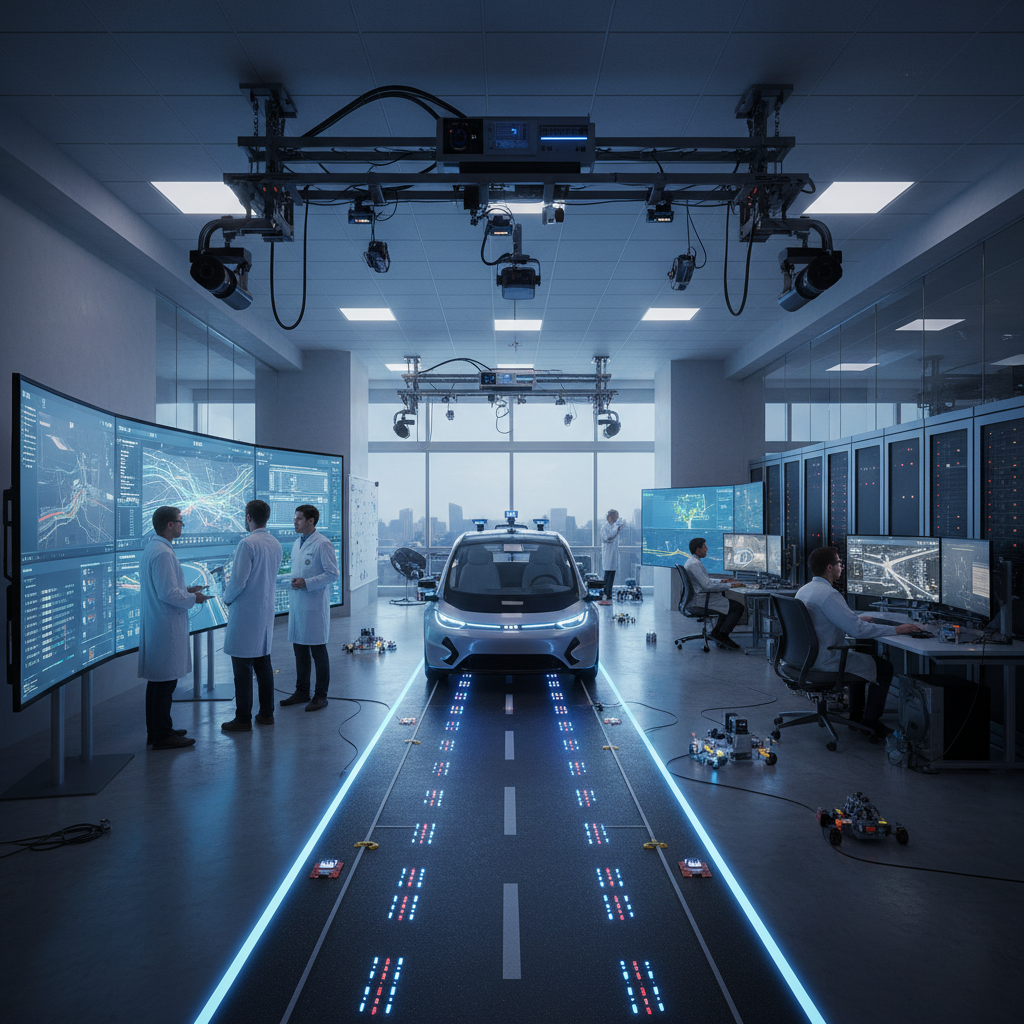
Transportation Safety
Safety remains the foremost concern of governmental agencies, industry stakeholders, and the public. The S2T Program develops evidence-based methods to eliminate preventable injuries and fatalities across all transportation modes.
Advanced Sensing
Cutting-edge sensor networks and perception technologies that enable real-time monitoring of transportation infrastructure and vehicle behavior.
Automation & Autonomation
Research in connected, automated, electric, and shared mobility systems — advancing the next generation of intelligent transportation.
Artificial Intelligence & AI-Enhanced Systems
AI and big data applications for transportation safety, traffic management, infrastructure assessment, and autonomous vehicle control.
Infrastructure Durability & Resilience
Pavements, structures, geotechnics, and materials research to ensure long-lasting, resilient transportation infrastructure.
E-Mobility & Energy Systems
Electric vehicle integration, battery safety, vehicle system control, and GIS-powered mobility research for a sustainable future.
Program Leadership & Faculty
Our faculty collectively cover major transportation research domains and have demonstrated recognized leadership at the state and national levels.
Leadership
Linbing Wang
Professor, Ph.D., P.E., F. ASCE, F. EMI of ASCE
Jidong J. Yang
Professor, Ph.D., P.E., F. ITE
Stephan Durham
Professor, Ph.D., P.E., F. ASCE
Faculty Members
Mi geum Chorzepa
Civil & Environmental Engineering
Sonny Kim
Civil & Environmental Engineering
Cami Li
Civil & Environmental Engineering
Handong Yao
Civil & Environmental Engineering
Jaime Andres Camelio
Engineering
Yunli Shao
Engineering
Kenan Song
Engineering
Angela Yao
Department of Geography
State-of-the-Art Research Infrastructure
The S2T Program is supported by world-class laboratories and research networks enabling cutting-edge transportation research across all focus areas.
The Sensing and Perception Lab
Advanced sensor systems and perception technologies for real-time transportation monitoring and data collection.
The Smart Mobility and Infrastructure Lab
Research on connected, automated, and smart mobility systems integrated with intelligent infrastructure.
The Geotechnical Lab
Cutting-edge facilities for transportation geotechnics, soil mechanics, and pavement foundation research.
The CAMIs Lab
The Cooperative Automated Mobility Innovations (CAMIs) Lab — developing the next generation of cooperative autonomous transportation solutions.
The Structure and Materials Lab
Comprehensive testing and analysis of transportation structures, bridges, and materials for durability and resilience.
The Georgia Network for Electric Mobility (GNEM)
A statewide network advancing electric vehicle research, infrastructure deployment, and e-mobility innovation across Georgia.
Education and Workforce Development
The S2T Program integrates research outcomes into education and workforce development, offering a comprehensive range of courses and training programs.
Undergraduate Programs
Foundational courses preparing students in transportation engineering, highway design, and infrastructure systems.
Graduate Programs
Advanced M.S. and Ph.D. curricula in transportation safety, AI, intelligent systems, and infrastructure resilience.
Seminars & Symposiums
Regular seminars, workshops, and symposiums to disseminate frontier research and bridge academia, industry, and government agencies.
Professional Training & Online Courses
Training programs and online courses for transportation industry professionals and agency staff, with certificate options to update knowledge and skills.
Related Courses
CVLE 4210/6210
Transportation Engineering
CVLE 4220/6220
Highway Design and Traffic Safety
CVLE 4710/6710
Infrastructure Condition Assessment
CVLE 6230
Transportation Safety
CVLE 6240
Introduction to ITS
CVLE 6250
Transportation & Infrastructure Networks
Partner with the S2T Program
The S2T Program welcomes collaboration with government, industry, academia, and communities to advance safe and smart transportation across Georgia and the nation.
Government Agencies
Collaborate on transportation safety policy, infrastructure planning, and technology deployment.
Industry Partners
Bring innovations to real-world transportation challenges and access UGA's cutting-edge research.
Researchers & Academics
Join research partnerships, access program data, and contribute to the evidence base.
Community & Public
Engage with our outreach programs and help shape transportation solutions for your community.
Ready to Build the Future of Transportation Together?
Reach out to the S2T Program team at the University of Georgia to explore research collaborations, educational partnerships, or professional training opportunities.
Program Director
Prof. Linbing Wang
Contact: Linbing.Wang@uga.edu
College of Engineering, University of Georgia